
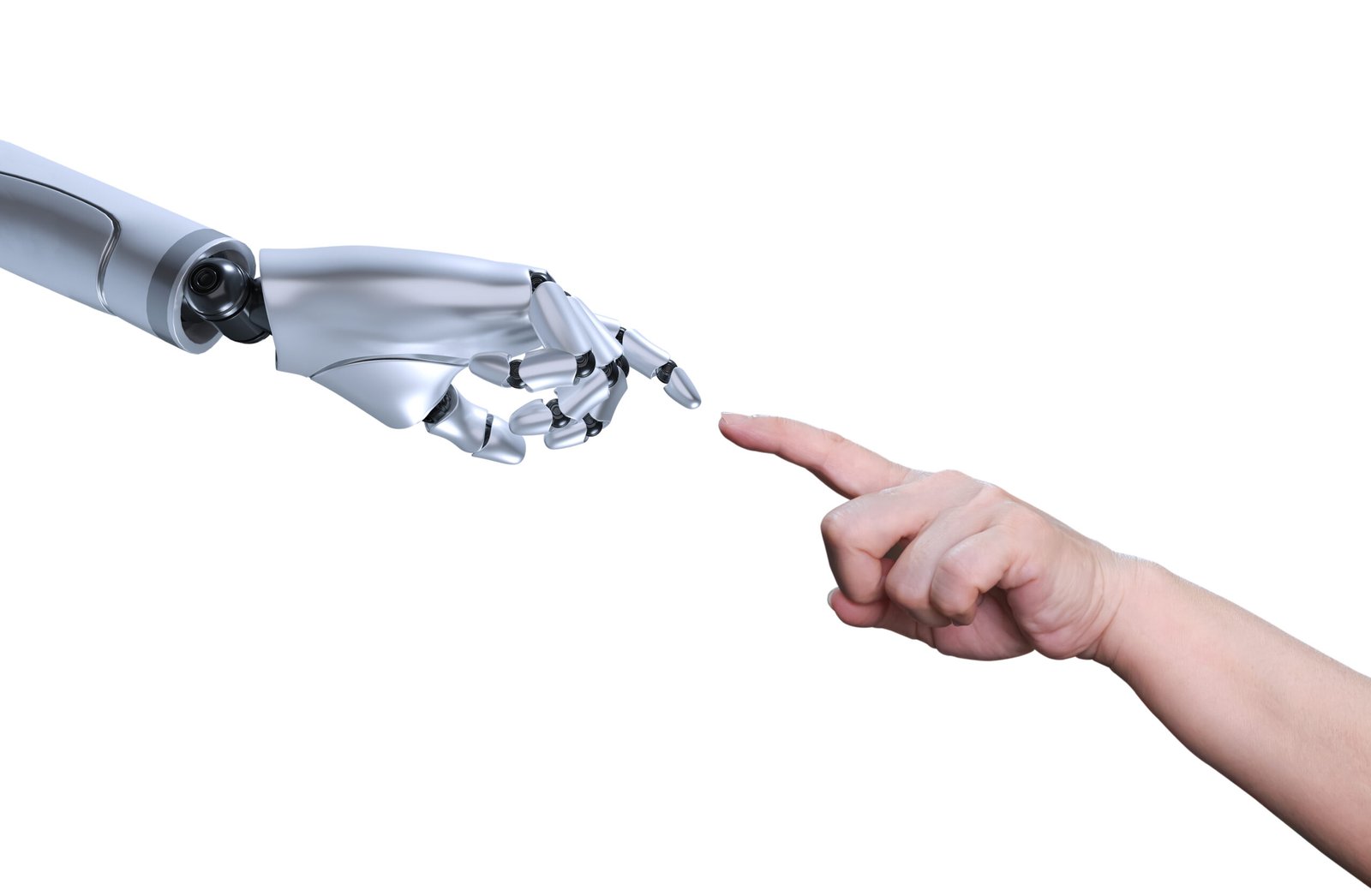
Businesses are right to scramble toward AI. MIT’s 2025 GenAI Divide report found that about 80% of organizations had already explored generative AI tools, and most have built AI into their everyday workflows. That’s a very wise move.
There is, however, a problem: AI is meant to be a tool, not a replacement. It exists to make work easier and more convenient, so your people can reach their goals and grow the business. What we see today is the opposite. Companies expect AI to replace employees and “automate” work that actually needs a human touch.
Why the Human Touch Still Wins
After all, every successful business thrives on bringing in an “outside-of-the-box” idea, approach or execution. AI can only do so much at this point. It recombines what already exists. It doesn’t read the room, sense a frustrated client or make a judgment call that breaks the pattern.
The customer service world, where AI has been pushed hardest, shows this clearly:
- A Gartner poll of 163 customer service leaders found that 95% plan to keep human agents, and a Gartner analyst put it plainly: the human touch remains irreplaceable in many interactions.
- Gartner also predicts that by 2027, half of the organizations that expected to cut their customer service workforce significantly will abandon those plans.
- In a later Gartner survey of 321 leaders, only 20% reported reducing agent staffing because of AI, while 42% were hiring for new AI-focused roles.
In other words, even in the most automated function, the smart money is on people and AI working together.
When Companies Go All-In on Replacement
Some businesses have already tried to replace human output with AI completely. The question is: did you get the results you were after, and did you actually make it cheaper? The answer might surprise you.
Klarna is the best-known example. The Swedish payments company announced in 2024 that its AI assistant was doing the work of roughly 700 customer service agents. In 2025, its CEO acknowledged that the push had been too focused on cost and had led to lower quality, and the company began recruiting human agents again. AI still handles the routine cases. People came back for the nuance, the complaints and the edge cases.
Klarna isn’t alone:
- Forrester reports that 55% of employers who cut staff because of AI now regret it, and predicts that half of AI-attributed layoffs will be quietly reversed, often offshore or at lower pay.
- MIT’s NANDA study found that 95% of organizations in its research saw no measurable financial return from generative AI, despite an estimated $30 to $40 billion in spending. The report points to brittle workflows and AI that doesn’t learn from context, and says the winners tie AI to specific workflows.
The lesson isn’t that AI doesn’t work. It’s that AI without people guiding it doesn’t work well enough to replace them.
How Side Ancore Uses AI: Augment, Don’t Replace
At Side Ancore, we augment our Anchors with AI to supplement their expertise and streamline their processes. AI is great when it’s used and guided by a human, because these systems are largely trained on what has been published publicly. And let’s be honest, most companies keep their systems and thought processes private anyway. That know-how lives in your people, not in a model’s training data.
When AI assists a skilled person, the results are measurable. In a Stanford and MIT study of more than 5,000 customer support agents at a Fortune 500 software company, agents using an AI assistant resolved about 14% more issues per hour. Newer, less experienced agents improved by about 35%, customer sentiment improved, and attrition was 8.6% lower than among agents without the tool. The system was designed to support agents, not replace them.
That’s the model we follow: skilled people who use AI to work faster, cover more ground and spend their time on judgment, relationships and ideas.
Technology Should Always Be Human-Led
At Side Ancore, we ensure that the use of technology will always be human-led: guided, checked and owned by a real person who understands your business.
Frequently Asked Questions
Will AI replace my team? The evidence so far says no. Gartner found that 95% of customer service leaders plan to keep human agents, and Forrester found that 55% of employers who cut staff for AI regret it. AI works best when it helps your team do more.
What is AI augmentation? AI augmentation means people use AI tools to speed up their work while keeping control of the decisions, the quality and the client relationship. The AI assists. The person is accountable.
Is it still worth investing in AI? Yes, with the right approach. MIT’s research found that the few organizations seeing real returns tie AI to specific workflows and measurable outcomes instead of treating it as a headcount replacement.
How does Side Ancore use AI? Our Anchors use AI to supplement their expertise and streamline their processes, so you get faster, more consistent output backed by a person who knows your business.
Want AI Speed With Human Judgment?
If you want the efficiency of AI without the risks of replacing your team, talk to Side Ancore about pre-vetted Anchors who use AI as a tool to help your business grow.
30 Minutes, No commitment.
Sources
- Klarna reverses AI customer service overhaul (Tech.co)
- Klarna goes on recruitment drive after ditching AI-first policy (Mind the Product)
- Klarna CEO reverses course (Entrepreneur)
- Forrester: AI layoffs to backfire (The Register)
- Gartner: 50% of organizations will abandon plans to reduce customer service workforce
- Gartner poll coverage (The Register)
- Gartner: only 20% of leaders report AI-driven headcount reduction
- MIT NANDA GenAI Divide report coverage (Digital Commerce 360)
- NBER: Measuring the Productivity Impact of Generative AI

Leave a Reply